
"Anyone can win in judo"
Judo places very specific physical demands on athletes. Explosive pulling movements, quick changes of direction, maximum body tension and permanent combat situations require not only strength and technique, but also stability, control and precise body awareness.
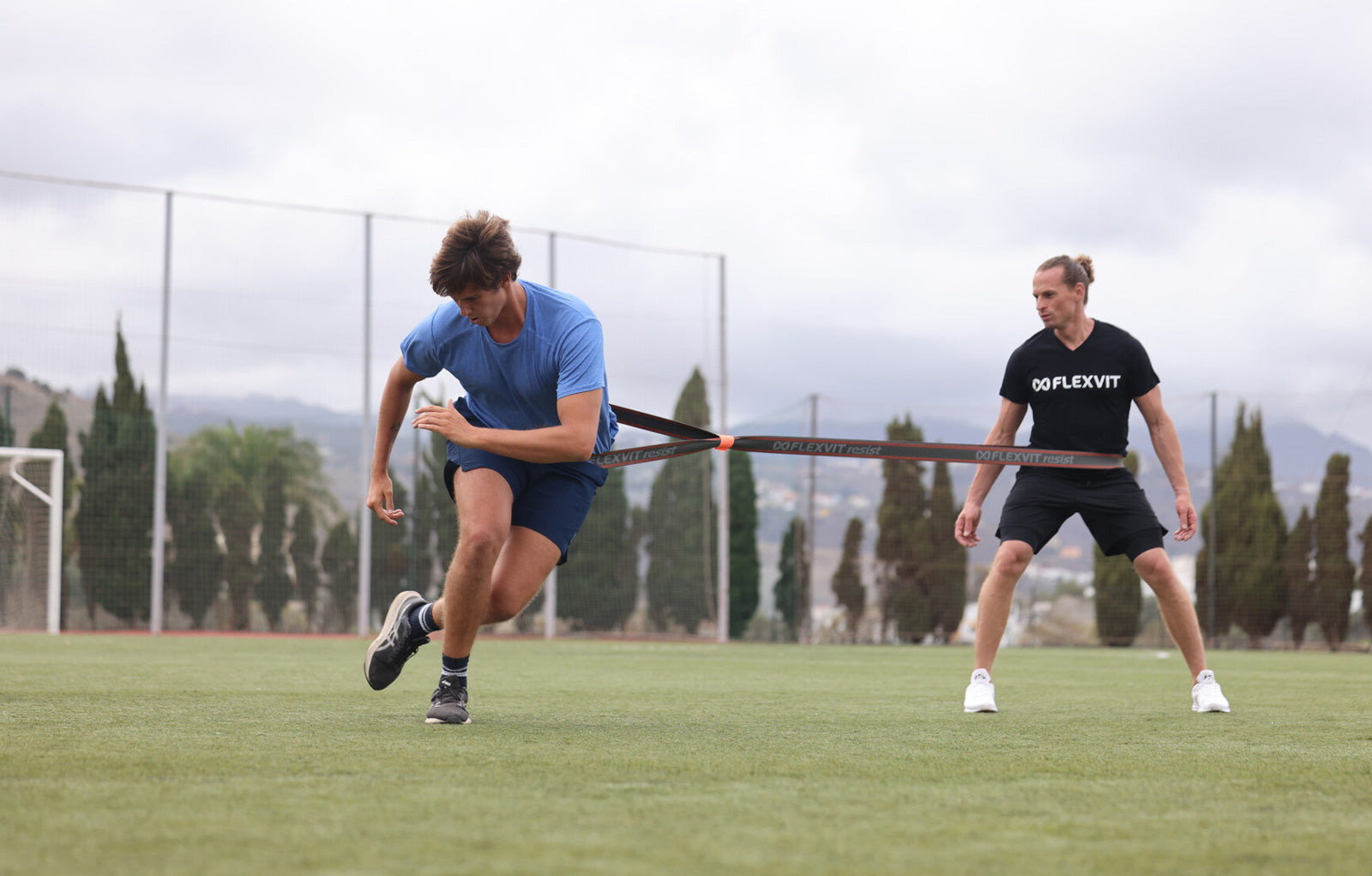
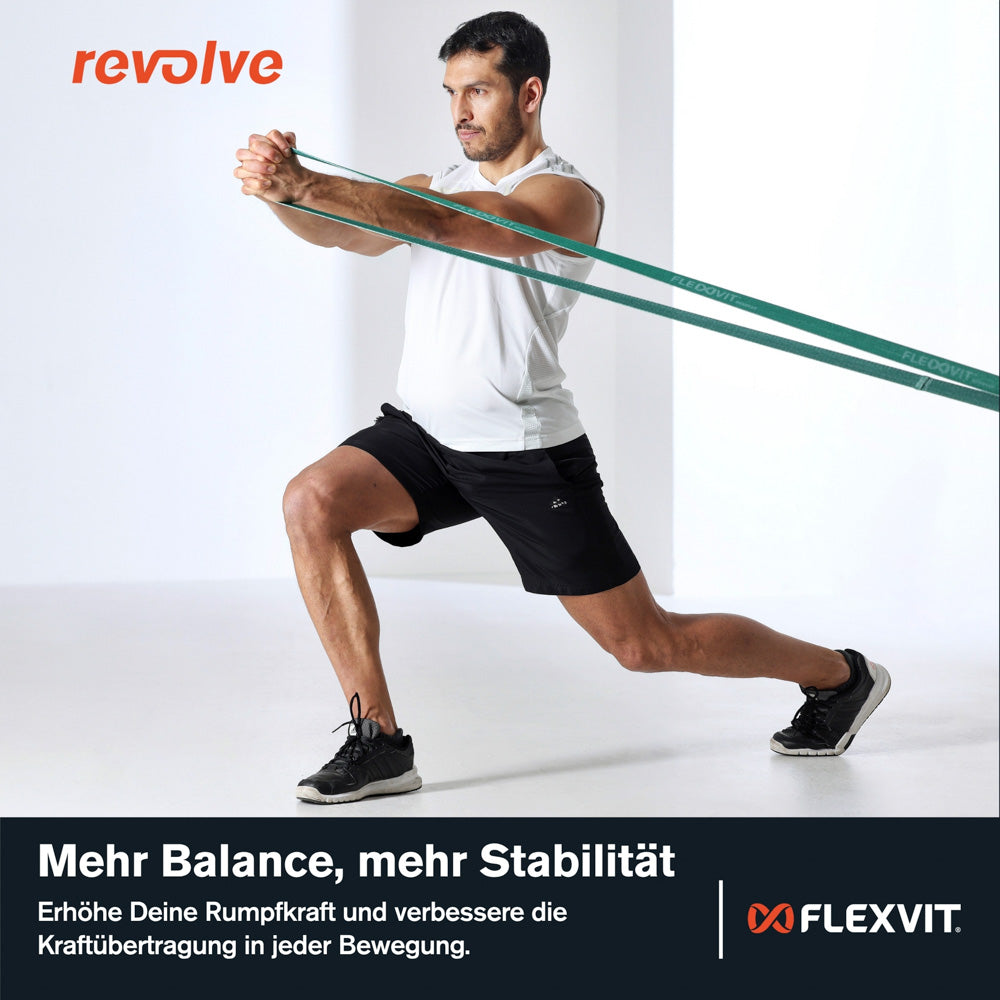
This is precisely why athletic training plays an increasingly important role in modern judo — as does targeted prevention and rehabilitation work. Together with the German Judo Federation (Deutscher Judo-Bund), FLEXVIT has even developed special judo-specific sparring bands that are designed to simulate typical movement patterns such as pulling, rotating and lifting movements.
The discussion with Anna-Maria Wagner therefore focused not only on competition preparation and training, but also on the role of the bands in the everyday life of a top athlete: from explosive competition drills to shoulder rehabilitation and small stabilising exercises that often make the difference in competitive sports.
The two-time world champion and Olympic medallist speaks very openly about injuries, prevention, competition stress and why, for her, the small training details are often crucial.
Interview with Anna-Maria Wagner
FLEXVIT: Anna-Maria, how long have you been doing judo and what still fascinates you about the sport?
Anna-Maria Wagner:
I've been doing judo for 21 years. What fascinates me first and foremost is the combat itself. And I simply find it beautiful that judo is somehow for everyone.
We have different weight classes, and even within the weight classes, athletes look completely different. No matter what your build, you can go into judo and adapt your special techniques to your body.
And the beautiful thing is: anyone can win in judo. Often a single second decides. Even someone no one expected can end up on top at the end of the day. That's what I find really cool about the sport.

FLEXVIT: What have been your greatest sporting achievements so far?
Anna-Maria Wagner:
The two world championship titles, definitely. And then, of course, the 2021 Olympics with bronze in both individual and team.
At the last Games, I placed fifth, so just narrowly missed out on bronze. But I had the honour of being flag bearer for Team Germany. That was a huge personal highlight.
It's also hard to compare with a medal, because it's a different form of appreciation. You fight for a medal yourself — that's in your own hands. Being a flag bearer is something that's given to you from outside.
FLEXVIT: How long have you been training with FLEXVIT bands?
Anna-Maria Wagner:
I think it started about a year ago. Our athletic trainer got in touch with FLEXVIT back then.
In judo, we've been working with so-called "Korea bands" for a long time. These are very strong bands that we primarily use for explosive pulling and turning movements. However, they were difficult to obtain – especially after COVID, there were major bottlenecks.
Then FLEXVIT started developing special bands for this purpose. First came test bands, then the prototypes. That's how it gradually developed.
FLEXVIT: Which bands do you use specifically?
Anna-Maria Wagner:
Special FLEXVIT sparring bands were developed for us: Yuko, Wazari and Ippon — named after the scoring in judo.
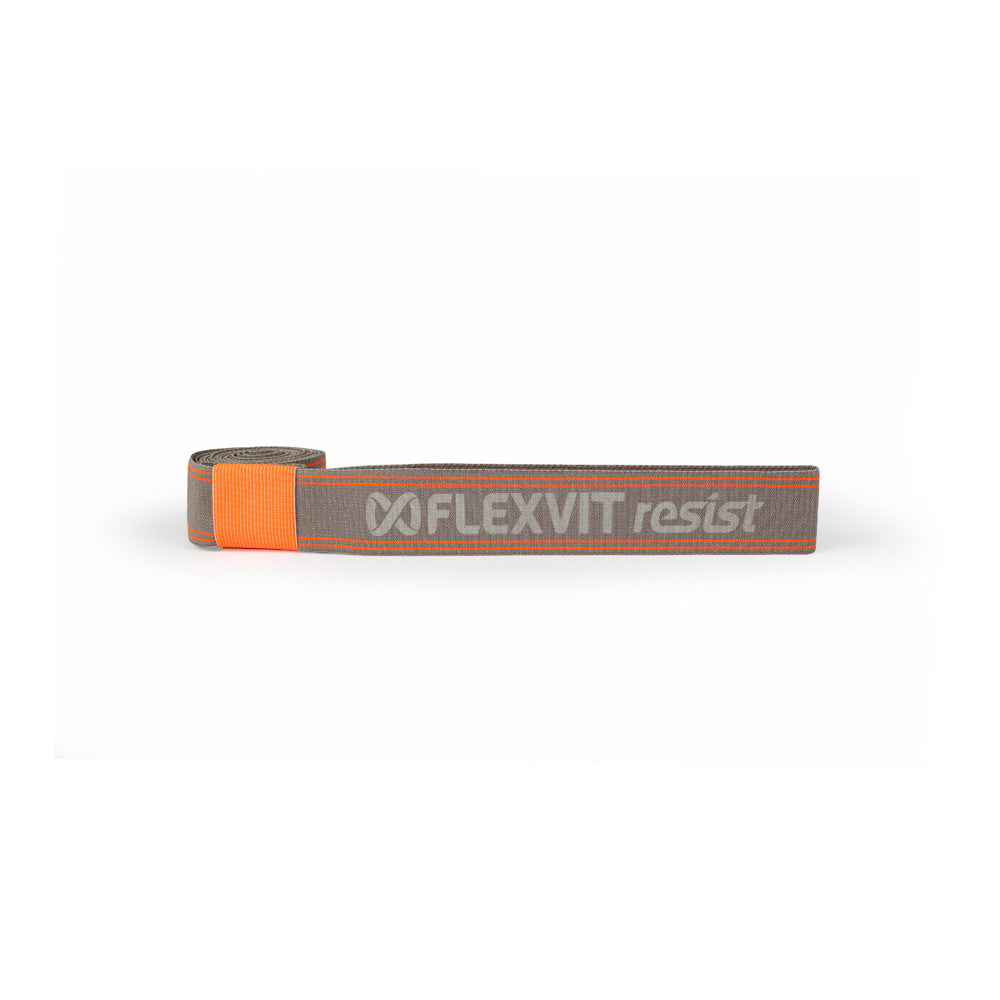
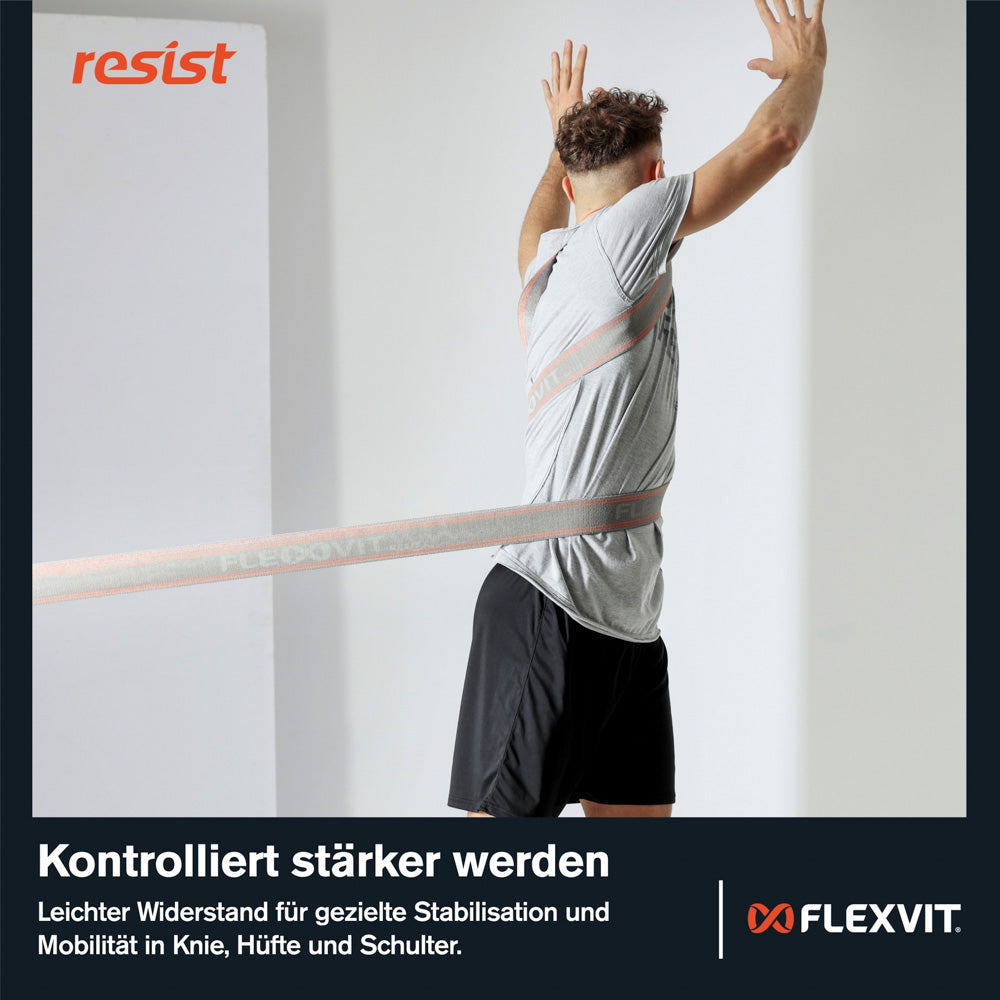
I most frequently use the Wazari band. In addition, there are lighter bands for stabilisation and rehab exercises, especially for shoulder work or rotational movements.
FLEXVIT: What makes these special judo bands so unique?
Anna-Maria Wagner:
With the bands, we essentially simulate the opponent or the judo jacket. Normally, we hold sleeves or lapels and want to move the opponent or turn ourselves in. We train precisely these movements with the bands.
Depending on what we want to train, we use different resistances. For example, if we do a lot of repetitions or fast frequencies, we take a lighter band. For explosive movements, we use the very strong bands.
Especially before competitions, we do a lot of speed and explosiveness with them. For that, you need bands that are brutally strong. You can't really pull them with just your arms — you have to work with your whole body.
FLEXVIT: What role do the bands generally play in judo training?
Anna-Maria Wagner:
On the one hand, of course, for all these pulling and turning movements. But they also play a big role in rehabilitation.
Judo is quite an injury-prone sport, and you always have to target or stabilise smaller muscle groups. Especially when you can't work with heavy weights yet, the bands are totally valuable. You can work very specifically with them.

FLEXVIT: Do you also use the bands a lot personally in rehab training?
Anna-Maria Wagner:
Yes, extremely much. I was injured quite often last year, especially my shoulder. I really did internal and external rotation until I dropped.
It's not about relearning the movement, but rather about strengthening the small muscles around the shoulder so that the joint is stable and well-centred.
At some point, it became indispensable. And I still incorporate it regularly, even if it's not as intense as it was right after the injury.
FLEXVIT: What advantages do FLEXVIT bands offer you compared to other tools?
Anna-Maria Wagner:
They take up hardly any space and are super practical for travel luggage. We travel a lot and can't always take bulky equipment with us.
And compared to classic resistance bands, you definitely notice differences. Those thin TheraBands eventually tear or stick together. The FLEXVIT bands are significantly more robust.
I also like the texture. The tension is distributed evenly, and the exercises feel cleaner as a result.
FLEXVIT: Have your training methods changed as a result?
Anna-Maria Wagner:
Yes, to some extent. Since we have good material and enough bands, we incorporate exercises with the bands into our training much more regularly.
Before, you just had some old rubber bands. Now, the bands are used much more naturally in training.
FLEXVIT: Do you use the bands more on your own or together with your coach and team?
Anna-Maria Wagner:
Both. I've often been on my own and then attached or looped the bands somewhere.
In team training, we often incorporate them into circuits. For example, if we're training a lot of turning or lifting movements, we often work together in pairs. But the exercises themselves remain the same — whether alone or in a team.
FLEXVIT: What role do the bands play in your competition preparation?
Anna-Maria Wagner:
Before competitions, the bands are extremely important to me.
It's all about activating the body and specifically preparing certain weaknesses. Especially with my shoulder, I now know exactly what to look out for.
I then do a lot of stabilisation exercises for the shoulder and core and try to centre and prepare the body well before the actual warm-up program even starts.
FLEXVIT: Can it be said that the bands also contribute to injury prevention?
Anna-Maria Wagner:
Yes, they do. Although for me, it usually came about because I got injured first.
After that, you naturally know more precisely where your own weaknesses lie and you work specifically to ensure that it doesn't happen again. Then rehab eventually becomes prevention.
FLEXVIT: What significance do the bands have for you now, overall?
Anna-Maria Wagner:
I would never say, "I became successful only because of the band." Competitive sports are far too complex for that.
But it's definitely a small puzzle piece in this whole system. In competitive sports, you try to work on all the adjusting screws, and for me, the band is simply part of that now.
Especially in rehab, it was an important companion. 2023 was strongly marked by injuries for me, and in 2024 it was about getting fit for competition again. The exercises with the bands were definitely valuable for that.
FLEXVIT: How was your collaboration with FLEXVIT?
Anna-Maria Wagner:
First of all, I think it's really cool that this collaboration came about at all. A big compliment must go to our athletic trainer Simon, because he brought up the idea. (Simon Schnell was the national athletic coach for the German Judo Federation from 2018-2024 and is now the national athletic coach for Pentathlon Suisse, editor's note)
And I thought it was great that Tim and FLEXVIT immediately embraced it. They really worked together until these special judo bands were created.
This testing phase, in particular, was exciting. The bands were repeatedly incorporated into training, and the athletes gave feedback — what worked and what didn't. The product then emerged from that.
FLEXVIT: Finally, looking ahead — what is your current sporting situation?
Anna-Maria Wagner:
Right now, to be honest, I'm just trying to listen to my body a bit.
The last few years before the Olympics were extremely intense, and I realised I needed some distance. That's why I won't be wearing a judogi anymore this year.
Currently, I'm doing a lot of strength training, going for runs, and focusing on getting my body properly fit again. After the Games, I also had knee problems and had to do rehab again. At the same time, I then notice my shoulder again and continue to work on that.
I'm just trying to do what feels good to me right now — physically and mentally. And then I'll take it step by step to see what comes next.
FLEXVIT: Thank you very much for the interview and the open insights.
Anna-Maria Wagner:
You're most welcome.

Brief portrait: Anna-Maria Wagner
Anna-Maria Wagner has been one of Germany's most successful judoka for years. The athlete from the German Judo Federation has won two world championship titles as well as Olympic bronze medals in individual and team competitions in Tokyo 2021. At the 2024 Olympic Games in Paris, she was also the flag bearer for Team Germany.
As part of the partnership between FLEXVIT and the DJB, Wagner regularly works with the specially developed FLEXVIT sparring bands, which have been specifically tailored to the demands of judo. The collaboration was initiated together with the association's athletic team and is continuously maintained and integrated into daily training.
More information: https://flexvit.band/pages/judo-training-flexvit-baender
To the FLEXVIT Sparring Bands: https://flexvit.band/products/sparring
Note: The interview was transcribed and edited for linguistic clarity and readability. The content of the statements was not changed.