
"Our job is to work behind the scenes"
Competitive sports often take place on big stages – medals, world championships, and Olympic finals are visible. Less visible is the work behind the scenes: daily care, prevention, recovery, and the trust between athletes and their physiotherapists.
We spoke with Nicole Hollaus about exactly that. The former competitive swimmer has been looking after elite athletes for many years, has worked in the German Rowing Federation's physio team since 2019, and has been the federation's head physiotherapist since 2025. Among others, she has been accompanying Olympic champion Oliver Zeidler since 2018.
In the interview, Hollaus talks about her work at World Championships and Olympic Games, typical injury patterns in rowing, the importance of mental factors in physiotherapy, and why functional training with resistance bands has become an important part of modern prevention for her.
The interview first appeared in pt – Zeitschrift für Physiotherapeuten, issue 02/2026.
Interview with Nicole Hollaus
Hello Nicky, nice to be able to talk to you today. What does a typical workday look like for you, for example during the Rowing World Championships?
Nicole Hollaus:
We are a team of three. This is important because it allows us to divide tasks. Depending on how many people we are at the competition venue or how external factors like heat affect the competition, we split two to one. This way, one physio stays at the hotel and two physios go to the track.
At the hotel, you are the contact person for athletes who still have their start later in the day or a training day – you are patiently available in standby mode and decide individually what needs to be done. Whether it's a mobilization or a treatment – or if we have an emergency where more time needs to be invested so that the person is fit for competition again. That always depends on the individual case.
At the competition venue, on the track, it's also very versatile. We really do everything that can help the whole team, from handing out drinks to warm-ups, initial post-race care, and individual treatments. Sometimes it's enough just to be there.
The rowing team is made up of many people. How many athletes do you treat in your role as a physiotherapist?
Nicole Hollaus:
Honestly, I don't know exactly. We are a team of almost 45 people, and all athletes have a free choice. Everyone can individually decide who they can work better with, who they get along with better, or who might have particular therapeutic specializations.
Ultimately, the number isn't that crucial. All three of us are very established people, have different strengths, and accordingly, it probably distributes itself relatively evenly. In the end, we definitely all have enough work.
Since a competition is always hard to predict, you're probably on call at all times, right?
Nicole Hollaus:
Exactly. It can also happen that you imagine a totally relaxed day at the track and think you can wander around a bit with your coffee in standby mode – and that's exactly when something always happens. You can never predict it.
But that's also somehow the beauty of it. The bottom line is that in addition to the actual work, a lot of presence is simply required. If you count this time as work, a lot really adds up.

You have been working closely with Oliver Zeidler for a long time. Do you still rotate which athlete is looked after by which physiotherapist within the team?
Nicole Hollaus:
Yes. We are a team, and therefore, in the decisive moment, no one should have any inhibition to approach the present physio.
Nevertheless, it would of course be nonsense to claim that not everyone favors one physio or another, or that certain combinations don't work better. Some need more calm, others someone who listens or brings more energy.
In Olli's and my case, it is indeed true that we are very focused on each other. This is simply because we have been working together since 2018. The fact that we know each other so well – including the highs and lows of the past few years – is a huge advantage in important situations like World Championships.
What are typical problems that rowers have?
Nicole Hollaus:
This might surprise some, but we see a lot of rib issues, such as rib stress fractures.
Many rowers also have problems with their lower back, intervertebral discs, and hip flexors, or rather, their pelvic position. This is because a lot of force is transferred from the legs to the lower back during rowing. If this area is unstable, it quickly leads to problems.
Compared to other sports, we also frequently see athletes collapse during competitions. This is because they produce extremely high lactate levels over the 2000-meter course. Sometimes it even leads to acute kidney failure. We need to be prepared for such situations too.
How exactly does the care of the athletes during a competition work?
Nicole Hollaus:
Basically, it's very individual. Before the race, we usually do a rather minimal individual preparation – for example, mobilizations or physiotherapeutic techniques to establish basic mobility.
This is followed by the individual warm-up and the race.
Immediately afterwards, we try to incorporate a quick mobilization session as quickly as possible to neutralize this seated functional approximation or restore the scapulothoracic rhythm.
At the hotel, the actual treatment then follows later – more extensive and often combined with osteopathic techniques or additional measures such as recovery boots, electrical stimulation, or heat treatments.
How important is prevention for you?
Nicole Hollaus:
Very important. By that, I primarily mean a good balance between exertion and recovery and the question: How do we create biomechanically good conditions?
We try to bring the body back to a normal state as quickly as possible after exertion so that optimal recovery can take place.
Especially in rowing, enormous forces act on certain structures – especially on the lower back and pelvic area. Therefore, we try to make athletes both mobile and stable at the same time so that these forces can be held and transmitted as well as possible.
Fewer injuries mean less training downtime. This, in turn, leads to higher training quality and ultimately to greater performance.
You often speak of stability, mobility, and motor control. Why are these so important to you?
Nicole Hollaus:
Because that's often where the foundation lies. If someone can't control their pelvis well or isn't mobile enough, the force will eventually end up where it doesn't belong.
Especially from a physiotherapeutic perspective, pelvic position in rowing is extremely important. It's the central contact point. If stability or control is lacking there, problems often arise in the lower back or other structures.
That's why these terms are so crucial to me: strength, mobility, stability, and motor control.
How important is the mental component to you as a physiotherapist?
Nicole Hollaus:
Very important. Because it's important to feel comfortable and to be able to handle stressful situations. That's the basis of good performance.
I find that as a physio, you are often not properly prepared for this kind of conversation. Yet we spend an enormous amount of time with the athletes – often in situations that are incredibly crucial for their sport.
Especially shortly before finals or competitions, you have to know very precisely: When do I say something? When is it better not to? When do I support – and when might I exceed my competence?
This is an area where, in my opinion, we could be better prepared.
You also work a lot with resistance bands. Why do they play such a big role in your work?
Nicole Hollaus:
They are definitely not my only tool, but a very important one.
The starting point was the question of how we can meaningfully simulate technical rowing positions on land. During on-water training, you can't simply isolate and change or train certain things – there are too many factors like wind, waves, or the actual movement.
That's why we started to recreate the boat position on land and specifically work with resistances – including resistance bands.
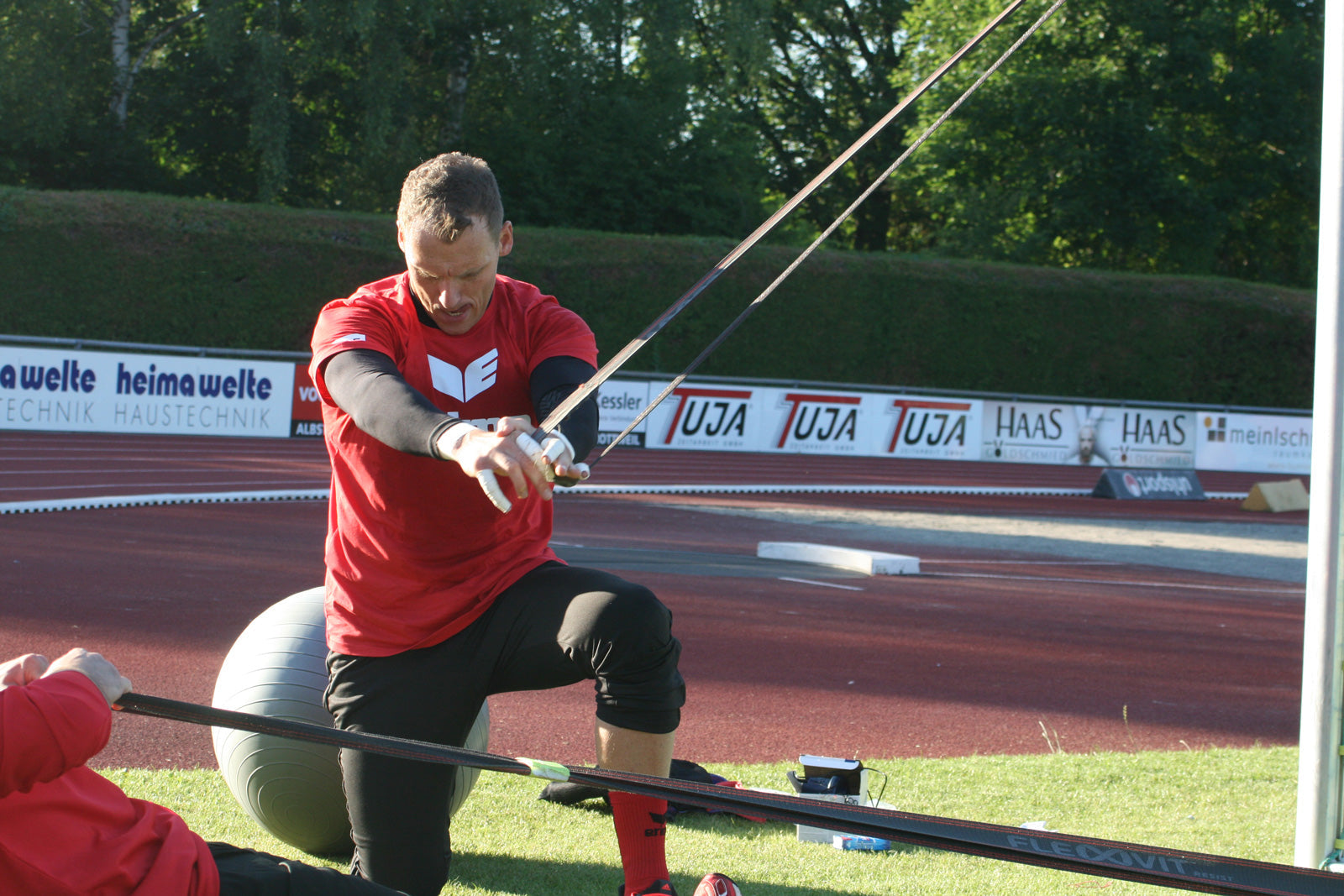
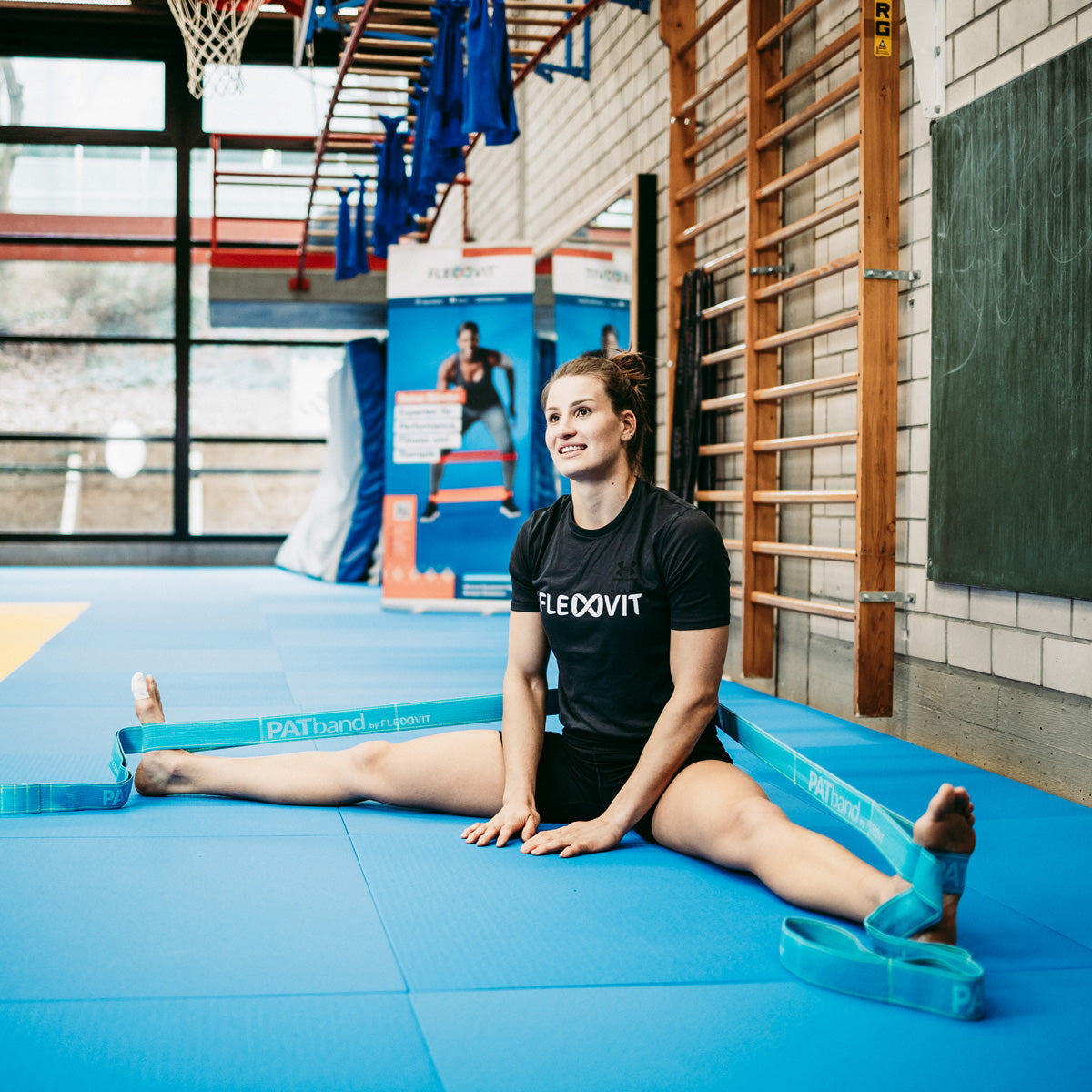
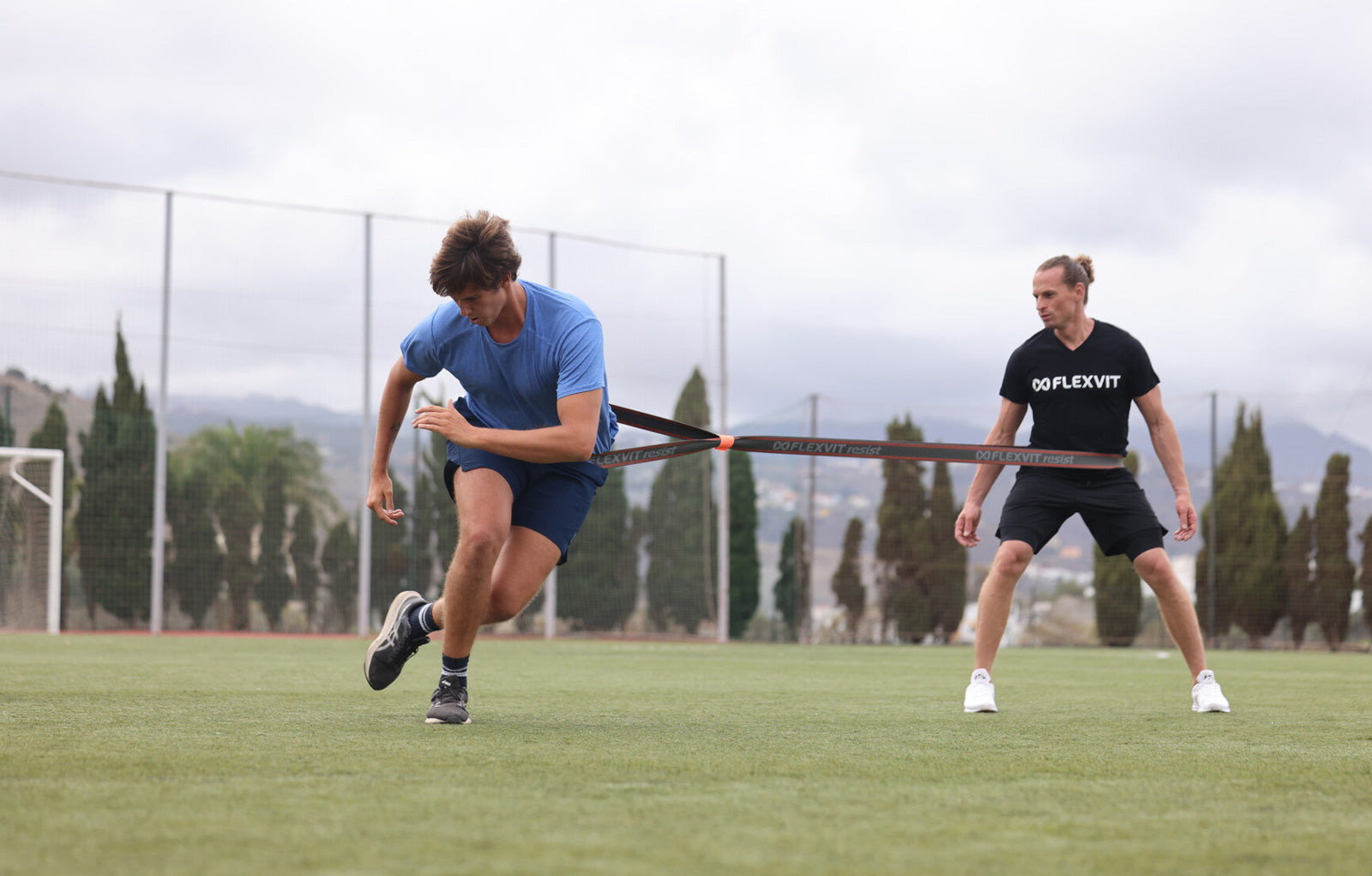
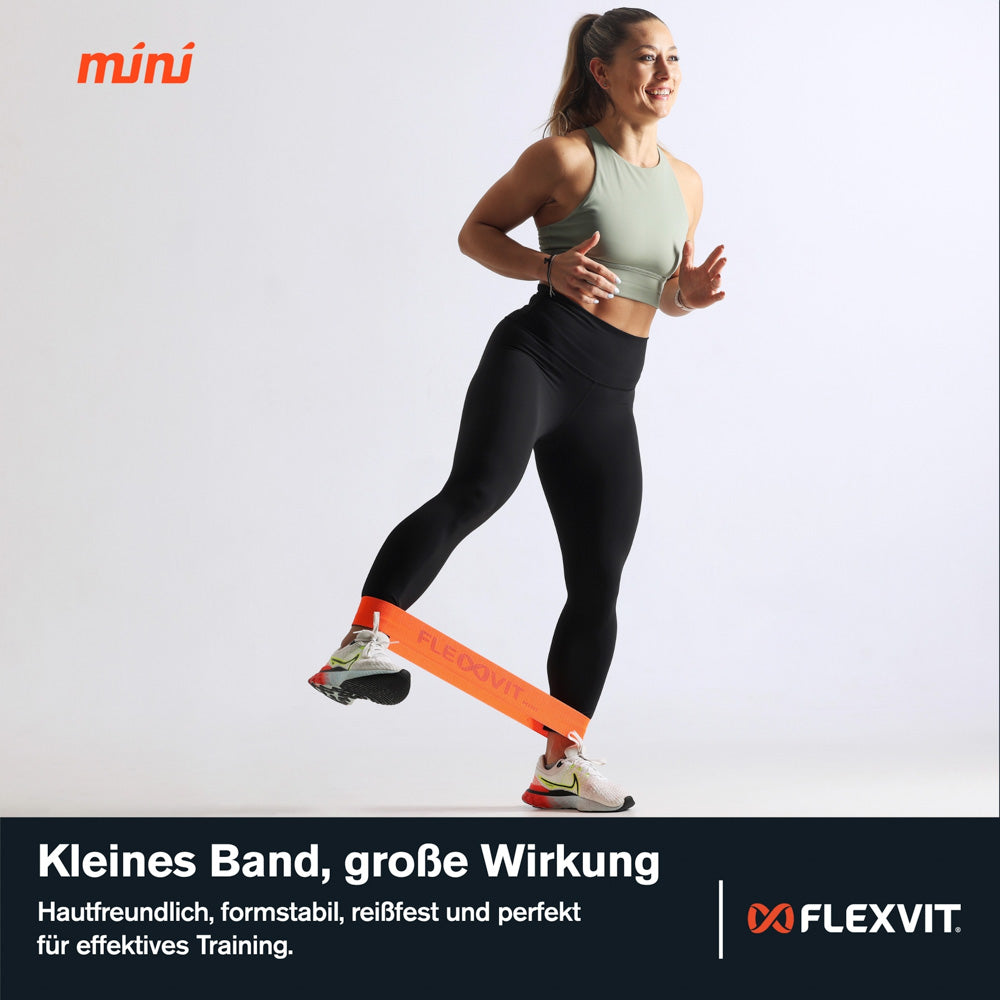
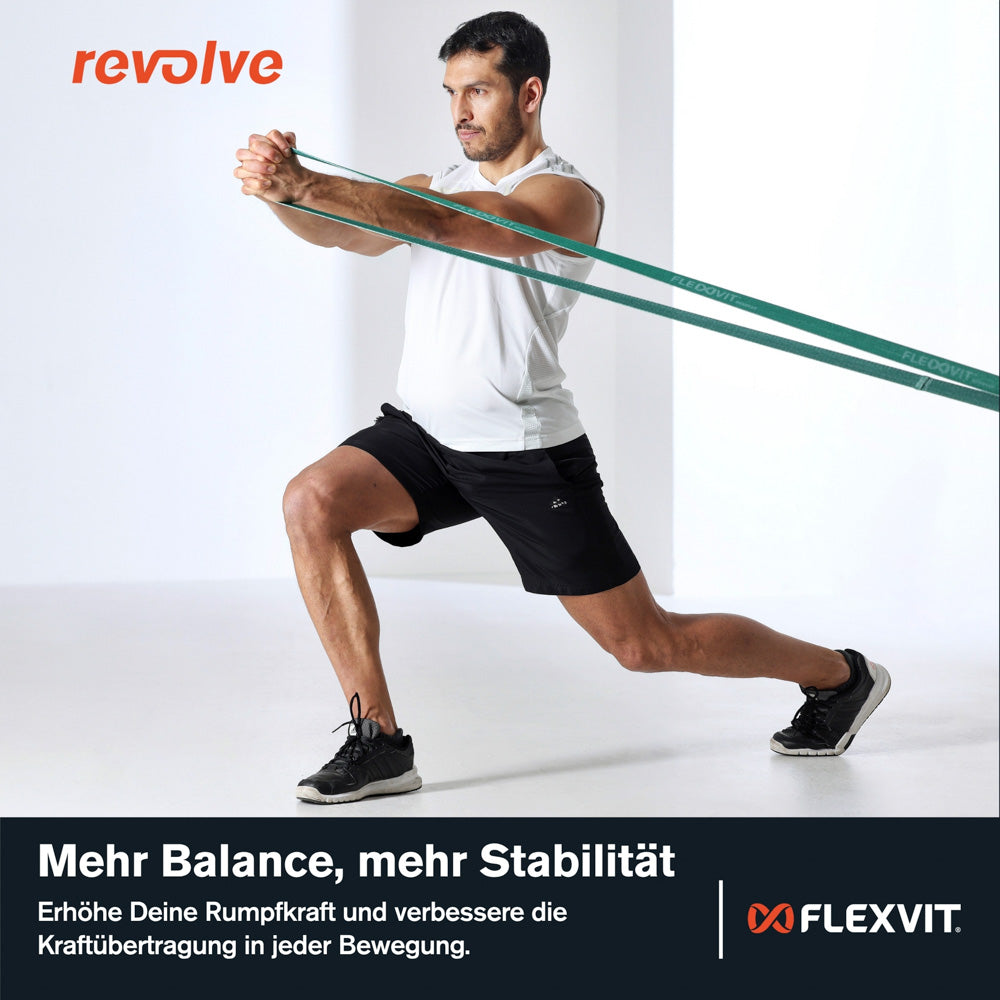
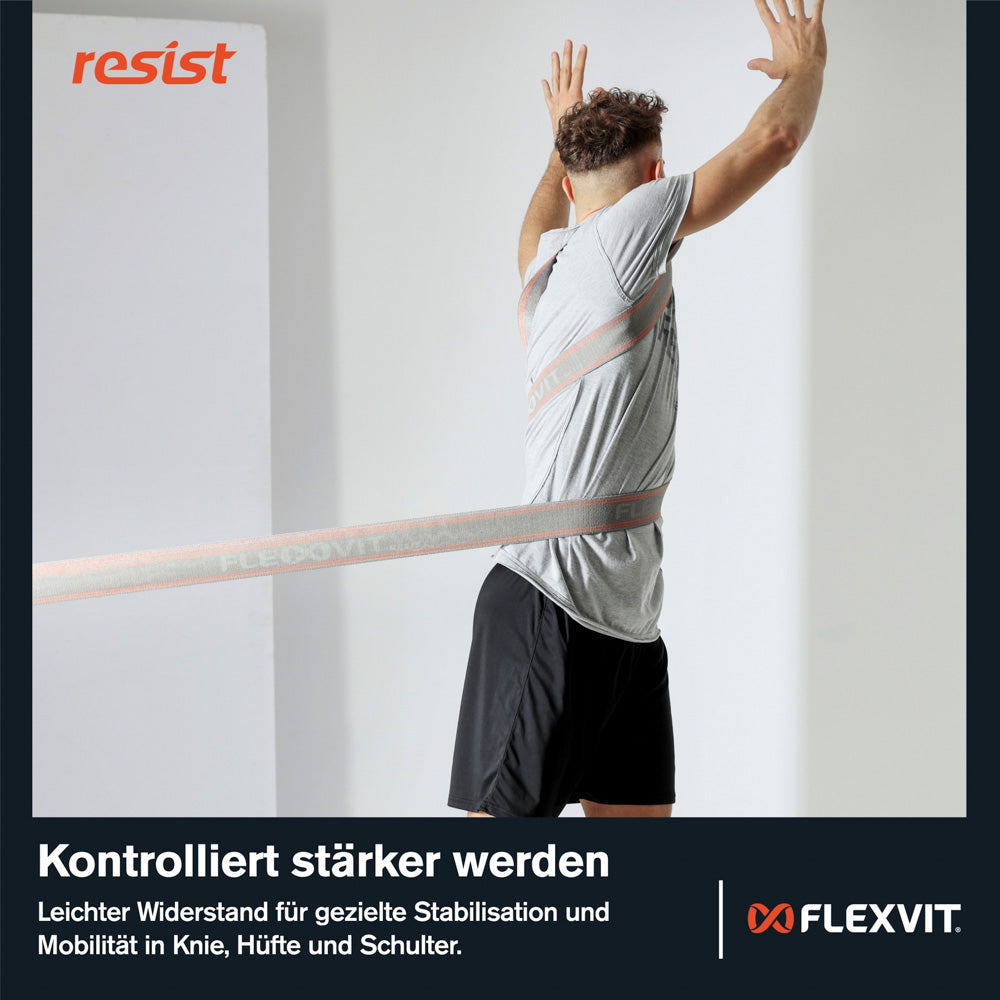
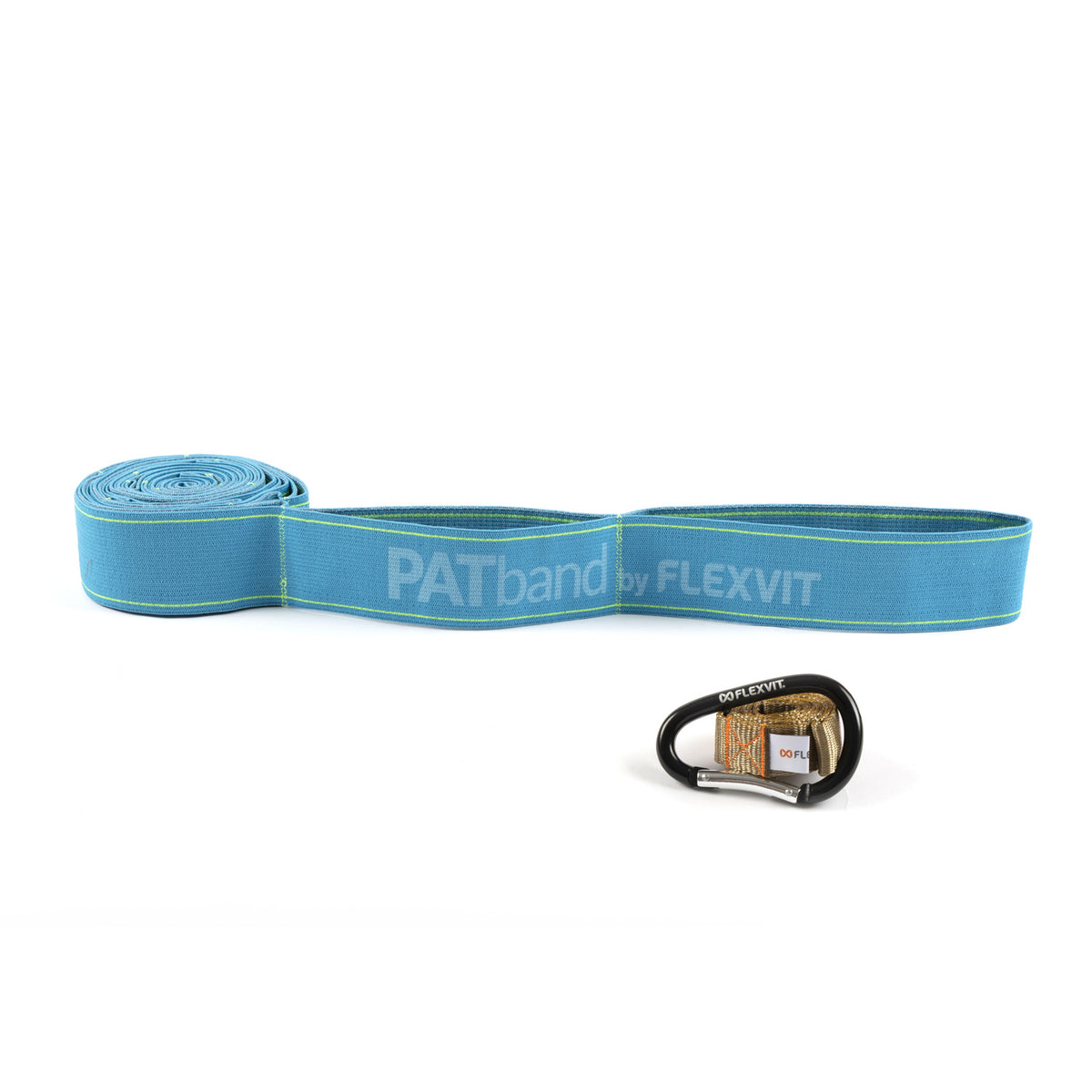
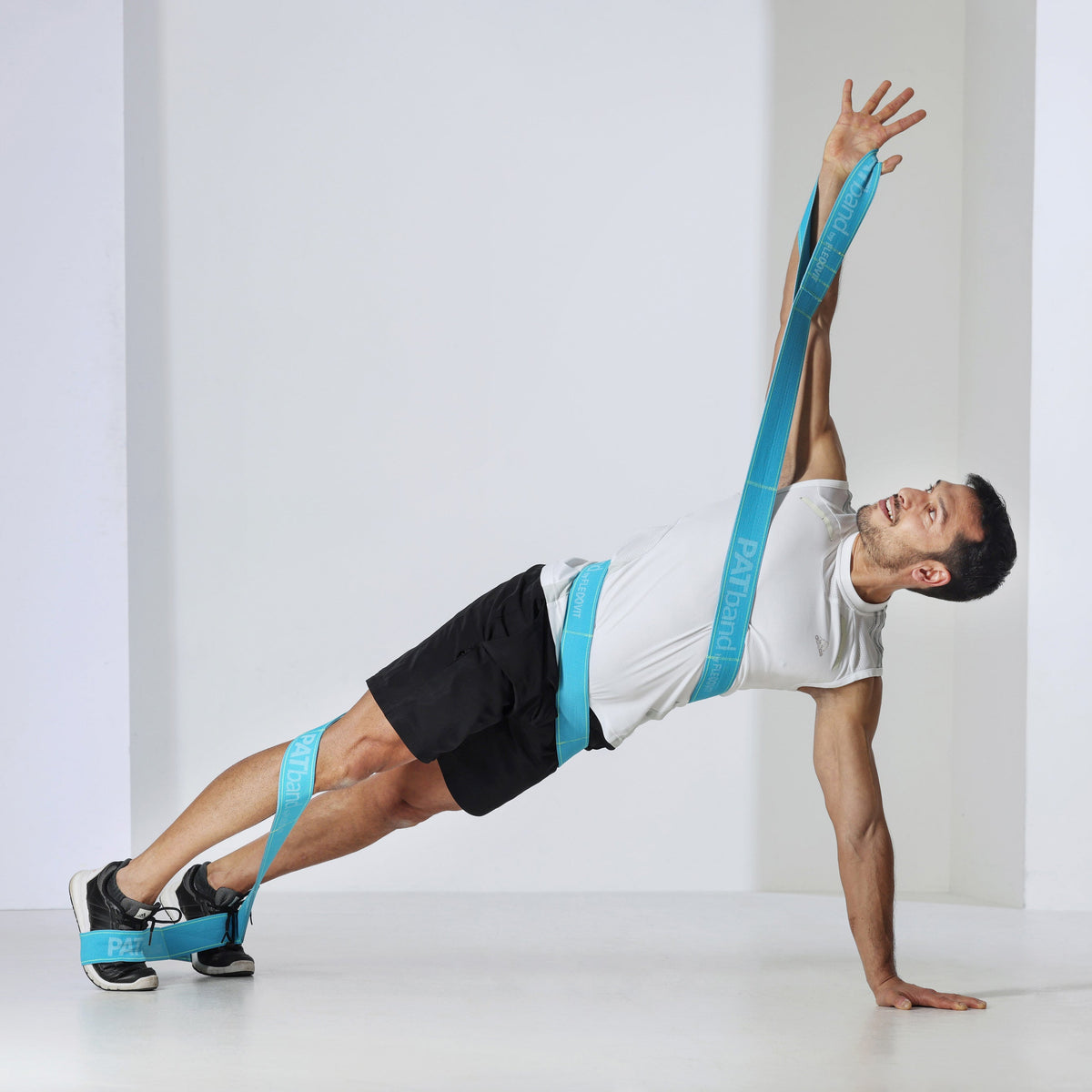
The bands are incredibly versatile. You can create different pulling directions, tensions, and positions, and thereby influence technical movements very specifically.
This allowed us not only to optimize technique but also, in some cases, to achieve measurable anatomical changes and performance increases.
How do you personally prepare for competitions?
Nicole Hollaus:
First, I look forward to it. I know the people I'm with, so the environment is familiar.
I actually quite like situations where pressure builds up.
Also, I like to inform myself about what's happening around me – for example, competition situations, conditions, or the competition. Not to interfere, but to be able to have conversations on an equal footing and to better understand what's going on.
What tips would you give physiotherapists who want to get into elite sports?
Nicole Hollaus:
Practice. For me, many years of practice were extremely important.
And: don't take yourself too seriously, but listen carefully and observe attentively. A lot happens between the lines. The better you understand people and can classify behaviors, the easier your work becomes.
And never forget: As physios, we are only there because the athletes are there. This is their stage. Our job is to work in the background, prepare everything, and ensure they can deliver.
Thank you very much for the interview.
Nicole Hollaus:
You're welcome.

Short profile: Nicole Hollaus
Nicole Hollaus was a competitive swimmer for many years before an injury forced her to end her active career. Today, she runs a practice with an orthopedic focus in Munich and combines manual therapy, sports osteopathy, and neuroathletic approaches in her work.
Since 2018, she has been looking after German rower Oliver Zeidler and has been working in the German Rowing Federation's physio team since 2019. In 2024, she accompanied the team to the Olympic Games in Paris, and since 2025, she has been the federation's head physiotherapist.
In her daily work, Hollaus has been relying on functional training with resistance bands for many years – especially for prevention, technical work on movement patterns, and rehabilitation. She has been working with FLEXVIT bands for many years.
Note: The interview has been transcribed and edited for linguistic clarity and readability. The content of the statements has not been changed.