
1. Introduction — Completing the Overall Picture
The first two parts of this series presented a clear framework for modern strength training. Strength is not a single ability but a multidimensional system. Its development is determined by load, volume, effort, and specificity. And in practice, these principles must be translated into structured, progressive training systems.
This raises a final and practical question:
If strength training is principle-based, what role do specific training tools play at all?
In applied practice, training tools are not neutral. They influence how resistance is generated, how movements are performed, and how easily training can be progressively designed.
For professionals in therapy, fitness, and elite sports, understanding these differences is crucial.
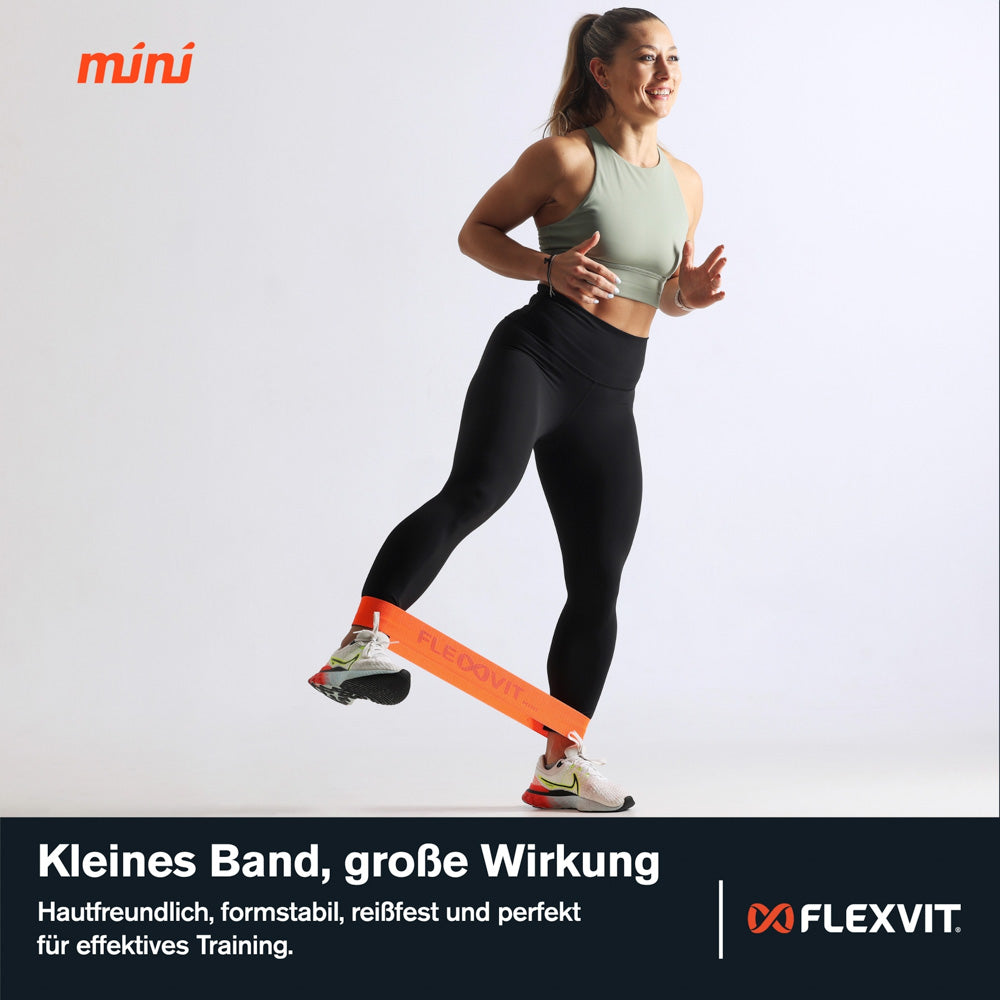
Resistance bands are often underestimated due to their simplicity. However, when viewed from a training science perspective, their role becomes clear:
They are not a simplified alternative to classic strength training, but an independent form of training with specific advantages and disadvantages.
2. Comparable Adaptations Across Different Training Modalities
Elastic resistance has been used in both fitness and rehabilitation for decades and has increasingly found its way into performance training.
The central question from a physiological perspective is whether relevant adaptations can be achieved with them.
Current evidence suggests that elastic resistance can induce similar neuromuscular responses as classic forms of training under comparable conditions. Electromyographic analyses show comparable activation levels between elastic resistance and free weights (Ebben & Jensen, 2002; Matheson et al., 2001).
Furthermore, training interventions with elastic resistance show improvements in:
- Muscle strength
- Muscle cross-sectional area
- Functional performance
across various populations, including untrained individuals and older adults (Mikesky et al., 1994; Page & Ellenbecker, 2003).
From a training planning perspective, this aligns with a fundamental consensus:
Adaptation is primarily determined by the training stimulus — not by the specific training tool.

3. Direction of Force and Transferability of Movement
The most fundamental difference between elastic resistance and free weights lies in the nature of force generation.
Free weights are subject to gravity, which means the load acts primarily vertically. This limits the ability to apply resistance precisely in other planes.
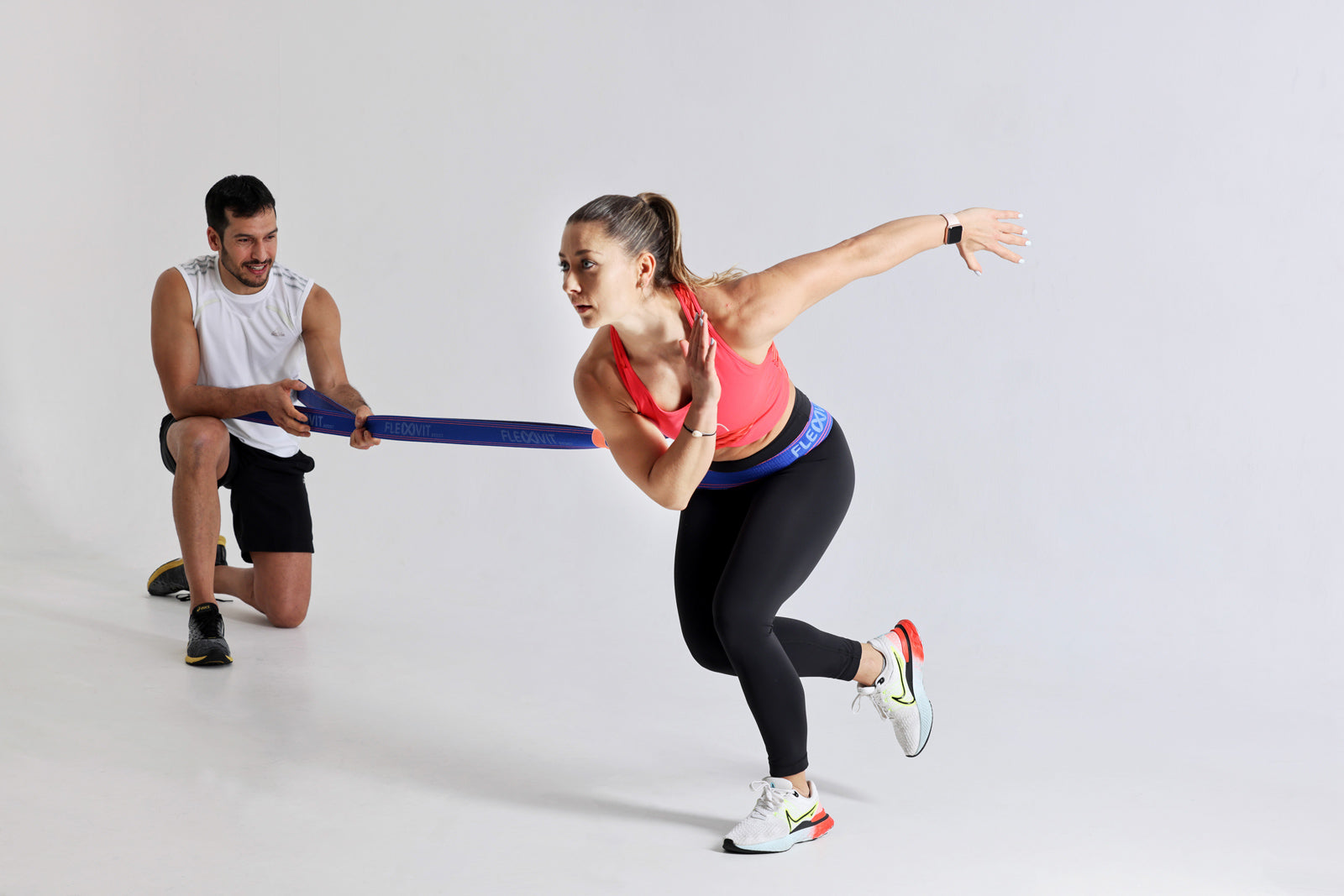
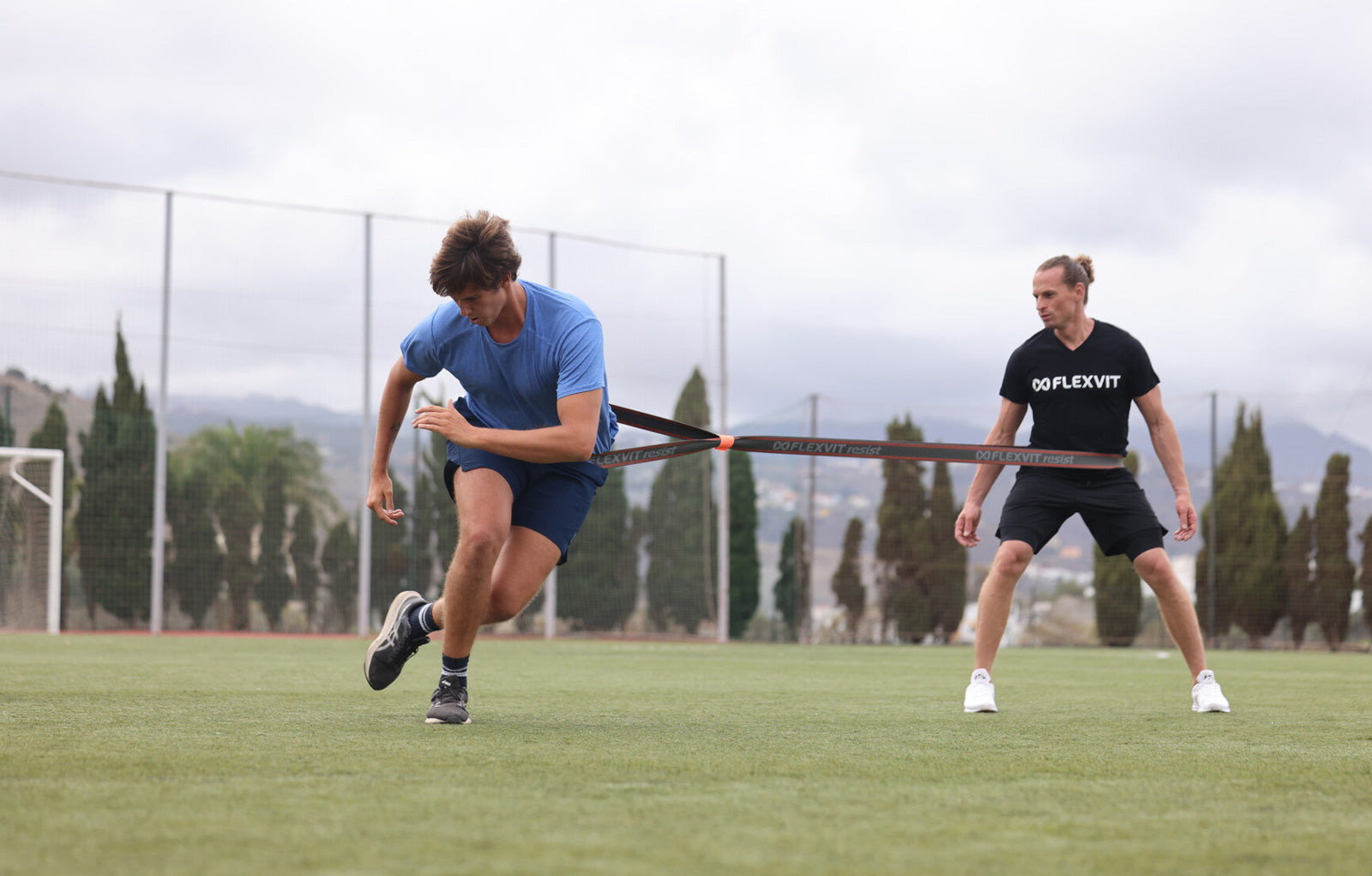
Elastic resistance generates force by stretching the material. This allows resistance to be generated in various directions — including horizontal and diagonal loads.
This difference is particularly relevant for the transferability to real movements. Many functional and sport-specific movements involve:
- Force development in multiple planes
- Changing directions of movement
- Coordinated segmental work
The ability to orient resistance according to these requirements increases the potential for transferability.
This leads to a central principle:
The more the training stimulus reflects the direction and coordination of real movements, the greater its transferability.
4. Variable Resistance and Strength Curves
Elastic resistance is characterized by a variable resistance profile. Tension increases with increasing stretch.
This leads to a load characteristic that changes throughout the entire range of motion. Unlike constant external loads, resistance increases with increasing range of motion.
This aspect is closely linked to so-called strength curves, which describe how strength capability changes across a joint's range of motion. Many muscle groups are weaker at the beginning of a movement and achieve higher strength values in the mid-range or end-range.
Elastic resistance follows this pattern:
- Lower load in weaker joint positions
- Increasing resistance with improved leverage
- Higher load in stronger phases of movement
Studies on variable resistance show that combining elastic resistance with classic loads can support the development of strength and power (Wallace et al., 2006; Heinecke et al., 2004).
In practice, this means:
- More efficient loading throughout the entire range of motion
- Higher recruitment of muscle fibers in strong positions
- A meaningful supplement to classic forms of training

5. Continuous Tension and Movement Control
Another characteristic of elastic resistance is continuous tension throughout the entire movement.
With free weights, muscle tension strongly depends on the position relative to gravity. In certain joint positions, the load can be reduced.
Elastic resistance behaves differently: Since tension is created by stretch, the muscles remain under load throughout the entire movement.
This results in several consequences:
- Constant muscle activation
- Less use of momentum
- Improved movement control
In practice, this often leads to:
- Better movement execution for beginners
- Improved neuromuscular control in rehabilitation
- More consistent training stimulus over repetitions
These properties make elastic resistance particularly valuable in training phases where movement quality is prioritized.
6. Changing the Direction of Force and Muscle Stress
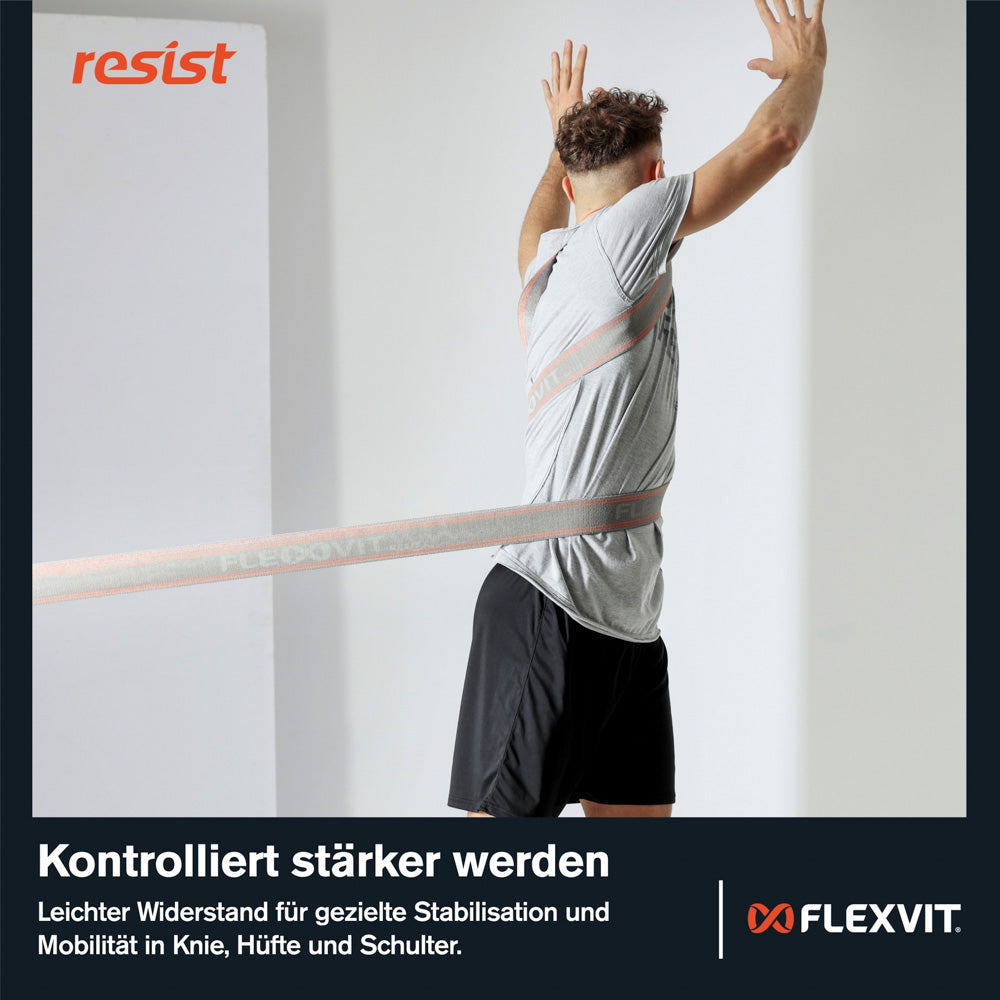
A particular advantage of elastic resistance lies in the ability to specifically change the direction of force.
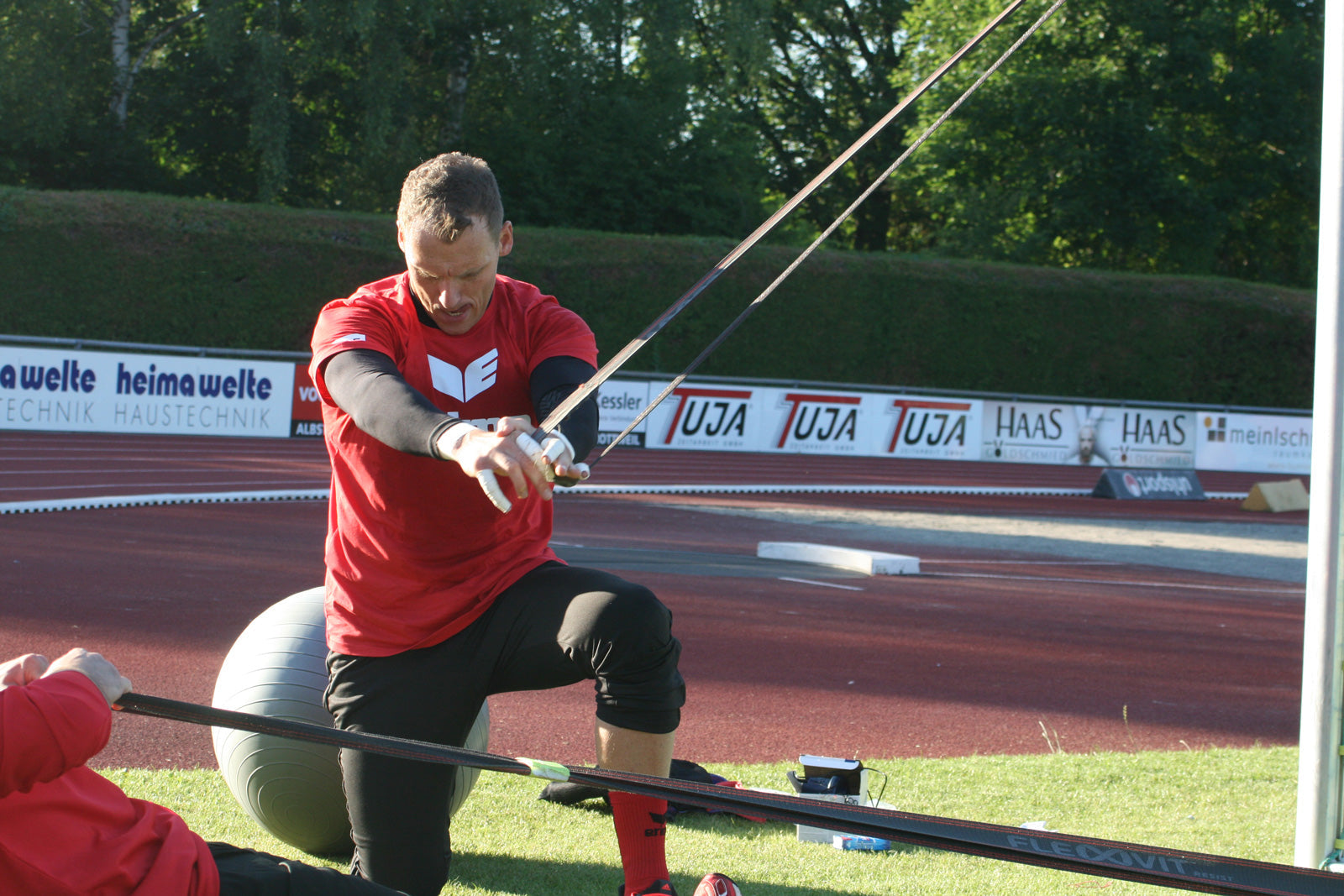
By adjusting the fixation point, the load can be shifted to different joints and muscle groups within a movement. Studies show that changing the direction of force can significantly influence muscle activation (Andersen et al., 2010).
This is particularly relevant for:
- Targeted muscle activation
- Joint-specific load control
- Rehabilitation processes
- Sport-specific preparation
Free weights offer significantly less variability here due to their reliance on gravity.
This results in a clear advantage:
Elastic resistance allows for a more precise adaptation of the direction of force to the movement requirement.

7. Power Development and Combined Approaches
Elastic resistance is often associated with lower loads. However, studies show that it can also contribute to the development of power — especially in combination with classic forms of training.
Research indicates that integrating elastic resistance into exercises like squats or bench presses can lead to improvements in:
- Maximum strength
- Rate of Force Development
- Explosive power
(Wallace et al., 2006; Heinecke et al., 2004).
Furthermore, sport-specific studies show improvements in:
- Shoulder strength and serve speed in tennis (Treiber et al., 1998)
- Rotator cuff strength in overhead athletes (Page, 1993)
These results demonstrate:
Elastic resistance is not limited to rehabilitation, but can also be effectively used in performance-oriented training.
8. Practical Advantages and Adherence
In addition to biomechanical properties, resistance bands offer practical advantages that play a significant role in real training settings.
They are:
- Lightweight and portable
- Cost-effective
- Easy to store
- Flexible in use
While these factors do not directly influence physiological adaptation, they have a considerable impact on training adherence — one of the most important factors for long-term success.
The American College of Sports Medicine highlights regular participation as a crucial factor for training success. Training tools that reduce barriers can therefore indirectly have a significant impact on results.
9. Integration Instead of Comparison
The juxtaposition of elastic resistance and free weights is often presented as an either-or. From a professional perspective, this view is not productive.
Both training tools offer specific advantages:
- Free weights → high loads and precise load control
- Elastic resistance → variability, adaptability, and multi-directional loading
In practice, an integrative approach is most effective.
For example:
- Compound exercises can address maximal strength
- Elastic resistance can support supplementary volume work
- Combined approaches can improve power development
This corresponds to a central principle of exercise science:
Different training tools address different aspects of the strength spectrum.
10. Conclusion — Training Tools in the Context of a System
Across all three parts of this series, a consistent overall picture emerges:
- Strength development is determined by fundamental adaptation mechanisms
- Program design controls their application
- Training tools influence implementation
Resistance bands are not a substitute for classic forms of training, but a powerful tool within a comprehensive training system.
For professionals, this means:
- Understanding the properties of different training tools
- Targeted adaptation to training goals
- Meaningful integration into programs
The decisive factor remains:
Not the training tool determines effectiveness — but the precision of its application.
References (Original Sources)
American College of Sports Medicine (ACSM)
https://www.acsm.org
ACSM Resistance Training Guidelines
https://acsm.org/resistance-training-guidelines-update-2026/
Ebben, W. P., & Jensen, R. L. (2002)
https://pubmed.ncbi.nlm.nih.gov/12423186/
Matheson, J. W., et al. (2001)
https://pubmed.ncbi.nlm.nih.gov/11522287/
Mikesky, A. E., et al. (1994)
https://pubmed.ncbi.nlm.nih.gov/7967809/
Page, P., & Ellenbecker, T. (2003)
https://us.humankinetics.com/products/scientific-and-clinical-applications-of-elastic-resistance
Wallace, B. J., et al. (2006)
https://pubmed.ncbi.nlm.nih.gov/16686563/
Heinecke, M., et al. (2004)
https://pubmed.ncbi.nlm.nih.gov/15574090/
Treiber, F. A., et al. (1998)
https://pubmed.ncbi.nlm.nih.gov/9689360/
Page, P. (1993)
https://pubmed.ncbi.nlm.nih.gov/8291631/
Andersen, L. L., et al. (2010)
https://pubmed.ncbi.nlm.nih.gov/19997055/
Frequently Asked Questions About Resistance Bands in Strength Training
Are resistance bands a substitute for classic strength training?
No. Resistance bands are not a substitute, but a supplement. They represent a distinct form of training that is particularly effective in combination with other methods.
Can resistance bands improve muscle building and strength?
Yes. Studies show that elastic resistance can have similar effects on strength and muscle building as classic training methods under comparable training conditions.
What is the advantage of elastic resistance over weights?
Elastic resistance allows for:
- multi-directional loading
- variable resistance throughout the range of motion
- continuous tension
- flexible adaptation to various training situations
Why is the direction of force important in training?
The direction of force determines how well training can be transferred to real movements. Since many movements are not purely vertical, elastic resistance offers crucial advantages here.
What does variable resistance mean in training?
Variable resistance means that the load increases during the movement. With resistance bands, tension increases with increasing stretch, which often better matches natural strength curves.
Are resistance bands also suitable for performance-oriented training?
Yes. In combination with classic training forms, they can support the development of maximal strength, power, and RFD and are also used in elite sports.
Why do resistance bands improve movement control?
Through continuous tension and the need to actively stabilize the movement, they promote neuromuscular control and reduce the use of momentum.
When are resistance bands particularly useful?
They are particularly effective in:
- Rehabilitation
- Movement training
- Supplementary strength training
- Functional and sport-specific applications
- Training with limited equipment
What role does FLEXVIT play in the field of resistance bands?
FLEXVIT has further developed resistance bands as a training tool and integrated them into structured training systems. The focus is not on the product itself, but on its systematic application within the context of modern exercise science.